
Masuya, Ken
Assistant Professor
School of Engineering
Dept. of Mechanical Eng.
Dept. of Mechanical Eng.



No posts.


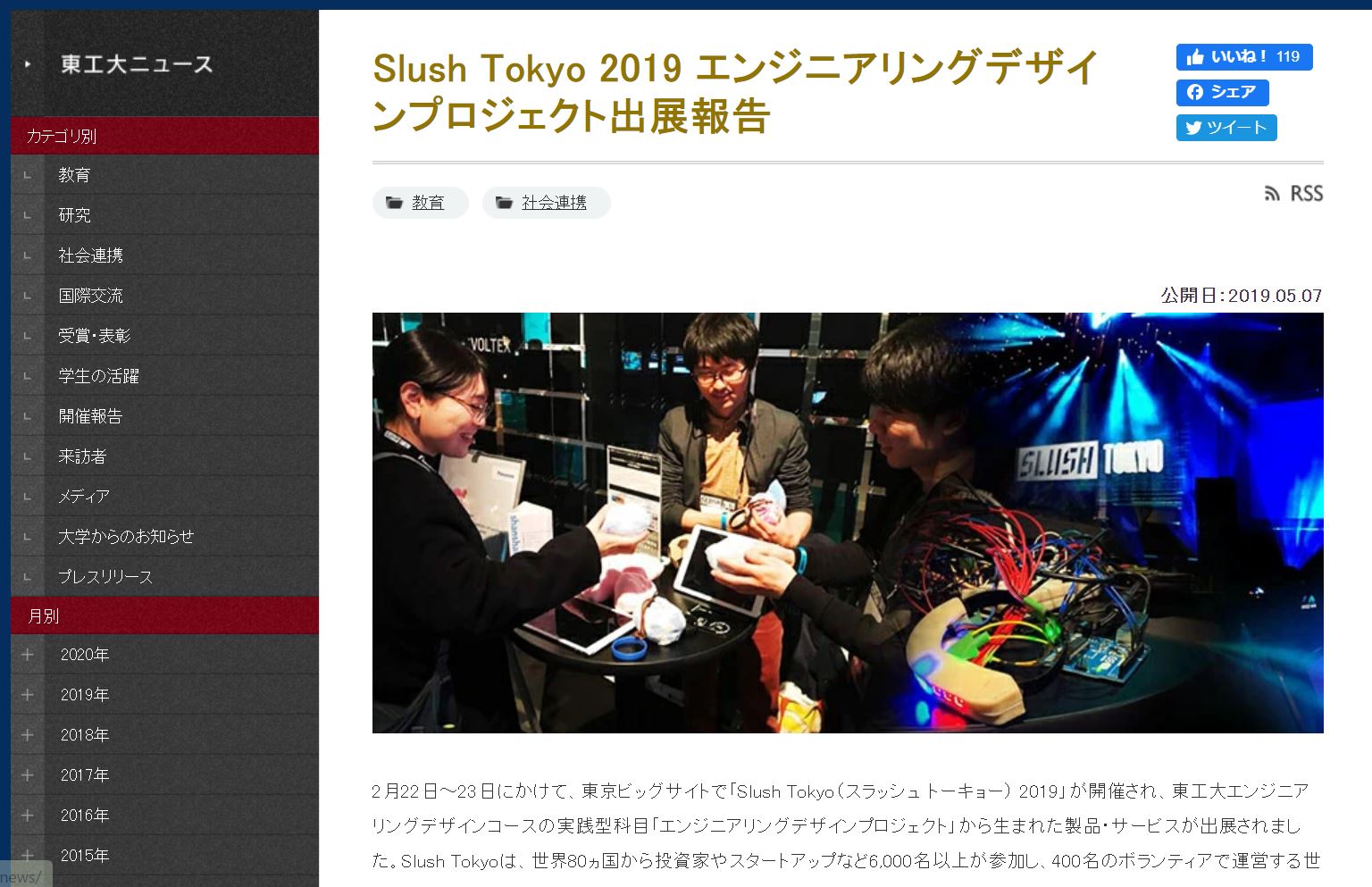
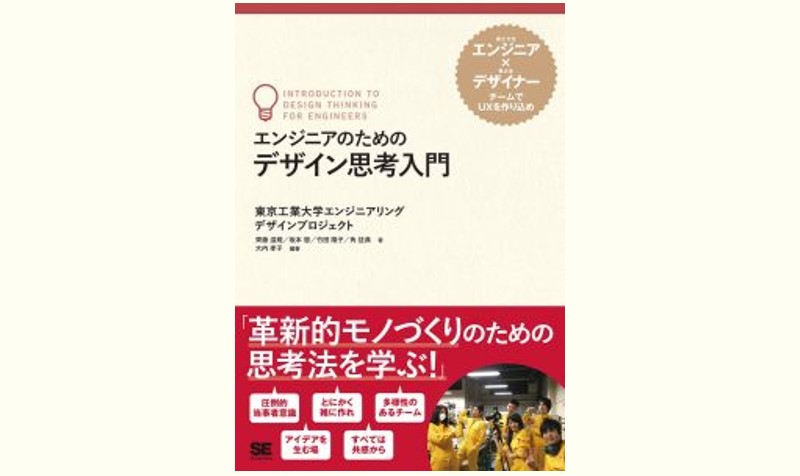
Introduces the events and project deliverables of the ESD course.
Please refer to the contents of the class.
“Service” means “human exchange process to co-create value” in
service marketing. My research analyzes service as a component of
the society, and focuses on service systems that achieve well-being,
especially those that transform people’s behavior and attitudes
and promote their growth. Well-being research to date has mainly
focused on “what is well-being?”. However, the findings of existing
research have not yet been fully utilized in our society. Therefore, the
research of “how can we enhance well-being in economic and social
activities?” is needed and my research vision is to increase the number
of services oriented toward human well-being in the society.
Realization of society for the human well-being through services
His research interest is on co-design as a way to create “usable and
attractive” interface between technology and societies. His research
aims to analyze and to support co-design which enables people from
various backgrounds such as users to collaboratively find needs, and
generate and deploy ideas. Currently, his research focuses on idea
generation with support of tactile objects. In addition, co-design is
used to apply technologies for development in developing countries.
His interests also cover methods to develop technologies which is
culturally acceptable and sustainably manageable by local people.
Exploring design as a way to apply technologies into social problems
“Human-centered design” is a method of problem-solving that aims
to make systems usable and useful by focusing on the users. While it
creates solutions that meet human needs, in recent years, design has
taken on greater responsibility. Actually, SDGs are well-known Global
Goals that aim to take into consideration their long-term effect on
human society and the global environment. For instance, “wicked
problems” such as climate change, an aging society, food loss, and lack
of quality education access cannot be solved simply by meeting human
needs. Our lab engages in transdisciplinary research to scientifically
investigate the design process in order to solve “wicked problems”
by realizing the preferable future based on socio-cultural trends and
cutting-edge technology. Members are encouraged to develop and
implement systems/products while working with experts in the actual
field while rigorously analyzing the design in order to understand how
and why the design process works and fails. We design in a wide variety
of domains, including livestock breeding, nursing care, education, and
disaster management.
Beyond Human-Centeredness:
Designing for People and the Planet
My research interests include developing innovative seismic structural/
non-structural vibration control systems, with specific focus on Tuned
Mass Dampers and vibration base isolators. I am currently working
on improving a novel compact Tuned Roller Mass Damper system
on which I could claim a patent through the University of Tokyo. The
system may be applied to various structures from high-rise buildings
and long-span bridges to non-structural equipment, in order to
mitigate unwanted vibrations due to earthquakes or wind. I strive
to make advantage of various science and engineering disciplines to
address Earthquake Engineering and Structural Dynamics problems.
Aspiring taller and longer through realizing innovative structural seismic vibration control systems
The purpose of the research topics is to realize a medical mechatronics
system, which enhances quality of life. In the research of “in-vivo energy
harvesting system”, I develop a generator system, which can convert the
energy of human activity into electrical energy inside the body to power
an implantable medical device such as a pacemaker and an in-vivo health
monitoring sensor. An implantable artificial heart and power assist
suit, however, consumes 10 to 100 watts. Therefore, for these devices,
I also develop “a wireless power transfer system,” with a function that
tracks the movement of humans wearing such devices. Another research
topic is “an intelligent artificial heart,” whereby the thrombus can be
automatically detected inside itself, as well as the flow rate controlled by
cooperating with a patient’s failing heart.
Development of mechanical systems
enhancing quality of life
For the construction of significantly large space structures, advances in
space-deployment, space-assembly, and space-manufacturing technologies
are important. Our laboratory conducts (i) the proposal of origami-based
deployable space structures, (ii) the development of verification methodology
for large space structures using state-of-the-art numerical analysis techniques,
and (iii) space demonstration of technologies by developing nano-satellites
ourselves. For example, our laboratory leads the development of 3U CubeSat,
OrigamiSat-1. It will be launched by a Japanese Epsilon rocket, and will
demonstrate multi-functional membrane deployment technology. Thin-film
devices, such as flexible solar cells, can be attached throughout the OrigamiSat1’s membrane. Additionally, our laboratory develops the verification strategies
through numerical analyses, which are applicable to actual solar power sail
missions; and develops the active shape-control mechanisms and control laws
for radio frequency space antennas. Through these technology developments,
our laboratory envisions new space structure systems in the future.
Creation of innovative large space
structures using numerical analysis
technologies and nano-satellite
demonstrations
In order to design services that move people’s hearts using technologies and to solve
complex social issues, it is essential that the people who use services, and other related
stakeholders, are involved in the design process; multiple stakeholders need to work
hand in hand to seek out intrinsic needs and derive solutions through a process of trial
and error.
Our laboratory promotes research into technologies and methodologies for effective
collaboration utilizing the perspectives and expertise of a diverse range of people based
on design thinking and human-centered design. In particular, we focus on “living labs”
where users, companies, and governments co-create services over a long period of time.
By observing the changes in people’s minds and behaviors in the process of co-creation,
user models are constructed, and tools and methodologies for effective co-creation are
developed. We do not intend to support the pursuit of profit by companies alone, but to
solve social issues through creating services, particularly focusing on solving the isolation
of the elderly and parents raising infants. We aim to contribute to improving well-being
and to the realization of a sustainable society by studying the process of co-creation.
Solving social problem through design of
services that move people’s hearts
To combat various problems in industry, we are creating new machines and structures and
proposing evaluation methods based on mechanical engineering, especially the strength of
mechanics and fluid mechanics. With high-speed cameras and numerical simulations, we visualize
invisible phenomena and build theoretical models. Research subjects are widely spread from
small instruments, such as collunarium containers and ophthalmic surgical instruments, to large
parts, such as automobile parts, shock absorbers, pumps, and pipelines. Materials and structures
with functions suitable for various applications are studied and developed experimentally,
theoretically, and numerically. We are conducting numerous studies focused on fluid-structure
interaction, impact phenomena, and multi-physics such as water hammer, liquid atomization,
bubble dynamics, and cavitation erosion. Moreover, in the Tokyo Tech Design Factory, we are
developing practical design methodology in engineering design processes, such as extraction
of user needs, prototyping with 3D printers, laser cutters and similar tools, business model
generations with managers, visualization and measurement of users’ experiences.
Research and development of new machines
and structures through engineering design
We have been developing microrobots that are micro-sized, travel in wide space supporting their
own weight, and perform power-needed tasks. The feature of our research is using functional
materials. First, by using electro-rheological fluid (ERF) that changes its viscosity when subjected
to an electric field, we proposed and have been developing simple and miniaturizable ER
microvalves. Based on MEMS (micro-electro-mechanical systems) technologies, we have realized
a 3-mm-long flexible ER microvalve. Second, for multiple degrees of freedom actuator systems,
we proposed and have been developing alternating pressure systems. By rectifying alternating
flows due to an alternating pressure source using synchronized switching of ER microvalves, we
have realized a 1.6-mm-long microfinger. Third, as hydraulic power sources, we proposed and
have been developing piezoelectric micropumps using fluid inertia that has an outlet pipe instead
of a check valve. We have realized the micropump with the world’s highest level of power density.
Realization of high-power density
microrobots using functional materials
have been developing a methodology for design science that bridges the
subjectivity in designing, such as subjective insight, illogical thinking,
and individual localization, and the objectivity in natural science, such
as objective grounding, logical thinking, and universal explanation.
This activity is composed of interdisciplinary exploration and design of
the following four pillars; (1) a method of first-person study that allows
subjectivity and objectivity to coexist, (2) a constructive method where
logical thinking – deduction – and illogical thinking – induction and
abduction – are employed, (3) the dynamic relationships between the
symbolic representation and operation in designing and their referents
– physical matters and conceptual issues – and (4) spatial schema
representing the spatial and temporal relationships between man
and environment via artifacts. In addition, in relation to the activities
mentioned above, I am involved in some intermedia art activities that
express the experience of architectural spaces and landscapes in the
form of sound and music with a composer.
Designing a methodology for design
science that sheds light on the action
known as design
A society that fosters resilience to changes in living function (a “living
function resilient society”) is required in the centenarian era. It has
become even more imperative to address the physical and cognitive
changes faced by children, the elderly, and disabled persons, and to
ensure they enjoy safe living environments in ways that allow them to
maintain active social participation levels.
Building the living function resilient society requires a new methodology
for “living centric design”. Recently, low-cost sensors, storage devices
and artificial intelligence have become widely available. To facilitate a
scientific approach to living centric design based on these technologies,
our laboratory is engaged in developing 1) living geometry, which
is computational technology for a living database, 2) living sensing
and support modules that enable personalized safety and social
participation, and 3) a living innovation social system for transforming
UN’s Sustainable Development Goals level social problems into industry
level solutions as components of a community-based participatory
research approach.
Living Centric Design: a New
Methodology for Resilience to Human
Living Function Change
Our lab has two main focuses for research interests: “Development of Microrobotics Technology” and “Methodology of Engineering Design”. The goal of the
first focus is to synthesize new types of functional structures that enable ways
of attaching and detaching a target object in the field of robotics by designing
micro-mechanical structure and surface material properties. The example
research themes are “Gecko-type electrostatic chuck” and “Manipulation
technology using capillary force on hydrophilic/hydrophobic surfaces”. The goal
of the second focus is to establish “the Methodology of Engineering Design”
that enables value creation in the process of development of products and/
or services through investigations using an engineering and cognitive science
approach, where the fundamental background knowledge of this topic comes
from the Project-Based-Learning class, Engineering Design Project, at ESD
of Tokyo Tech for industry-university collaborations. The research theme
examples are “Members’ diversity effect on ideation process in design projects”
and “Incubation effect on the success rate in solving insight problems”.
Value creation by development
of micro-robotics technology and
methodology of engineering design
For diffusion of innovation to solve various social issues and improve people’s quality of life, it is
essential to cooperate with people of diverse background and knowledge. However, to realize this
cooperation, a proposition that dialogue among diverse people tends to be easily broken must
be solved by “Communication Design.” Our laboratory policy is to conduct “Action Research,”
a repeating cycle of going to actual fields where problems occur, extracting and analyzing the
issues, and giving feedback to the fields. In the actual local community, we strongly promote
cooperation and collaboration between local governments, residents, and companies, to solve
the social issues that are complexly intertwined. To date, we have tried to develop assistive
technology devices, such as a 4-wheel electric power-assisted bicycle and a meal assistive robot
for frail elderly people, by interdisciplinary and multi-industry cooperation. Highly welcome are
especially those who want to analyze the diffusion of innovation from the viewpoint of people’s
interaction, those who are interested in communication and cooperation among people having
less common points, and those who want to organize communication problems in their own
workplaces from a bird’s-eye view.
Communication design for
diffusion of innovation
My research interests are quality of life improvement in our daily life based on Robotics and
Control Engineering. Some mechanical devices have been developed as useful tools, e.g., medical
robots and welfare devices, while my research fields are not limited to them. To date, I have
challenged ‘Development of a human motion support device’, ‘Motion enhancement for motion
instruction’, ‘Optimal distribution of objects in exhibition space’ and more, based on motion
capture data or human muscle characteristics. These topics are strictly related to our daily life and
the main purposes are realization of a ‘comfortable life’ with the keyword ‘non-linear dynamics’.
The non-linearity of the mechanism and dynamics makes it difficult to intuitively understand;
however, it sometimes yields useful phenomena. The main focus of my research is designing and
synthesizing these phenomena for our comfortable life and environments from engineering and
science points of view.
Robotics and non-linear dynamics for
quality of life improvement
我が国は既に超高齢社会に突入しており、世界的にも高齢化は加速傾向
にあります。産業革命以降の医療技術の進歩により、平均寿命は著しく
向上しましたが、真に豊かな社会を実現するためには、健康寿命の向上
が欠かせません。そこで機械工学の立場から、クオリティオブライフを考
慮した医療デバイスや機械システムの研究を行っています。現在取り組
んでいる「生体内エネルギーハーベスティング」では、定期的な電池交換
が必要なペースメーカなどの医療デバイスや、今後実用化が期待される
体内ヘルスモニタリングセンサの電源として、我々人間が生命活動で消
費しているエネルギーの一部を、体内で電気エネルギーに変換する技術
を研究しています。「ワイヤレス給電」の研究では、消費電力の大きい人
工心臓を植込んだ患者さんや、災害・介護現場における電動パワーアシス
トスーツを装着した作業者の動きをトラッキングし、常に離れたところか
ら高効率にワイヤレスで電気を送電する技術を開発しています。また、「
人工心臓」の研究では、人工心臓内の血栓を自己検知する技術や、患者
さんの運動状態に合わせて、病気の心臓と協調して拍動制御を行う人工
心臓を開発しています。
クオリティオブライフ向上を目指した
機械システムの創出
産業用プラントの配管内で作業を行うマイクロロボットなど、小さいサイズで自重を支え
ながら広い領域を移動し、パワーを要する作業を行うマイクロロボットの実現を目指した
研究開発を行っています。そのアプローチとして、固有の機能性を有する機能性材料を
応用することを特徴としています。具体的には、電界を加えると粘度が大幅に上昇する
ERF(電気粘性流体)を用い、シンプルでマイクロ化可能なERマイクロバルブを開発し
ています。MEMS(微小電気機械システム)技術を用いて長さ 3 m m で柔軟なフレキシ
ブルバルブを実現しています。また、多自由度アクチュエータシステムにおける配管ス
ペースの問題を解決するため、往復する流れを発生する交流圧力源を用い、その動きと
合わせてERマイクロバルブを開閉することで整流し運動を取り出す交流圧力源システ
ムを提案し、長さ1. 6 m m のマイクロフィンガを実現しています。さらに、液圧パワー源
として、圧電素子を用いた往復ポンプの出力側のチェック弁の代わりに細い配管を設置
し、流体の慣性効果を用いたマイクロポンプを提案し、世界最高水準の出力パワー密度
を実現しています。
機能性材料を応用した高パワー密度の
マイクロロボットの実現
デザインするという行為を対象とする科学の方法は自然科学の方法と全く同じではない。自然科学が前提とする客観性、論理性、普遍性は、デザインにおける主観的な判断、非論理的な思考、個別性を捨象する傾向にある(中村雄二郎)。また、デザインにおいてはデザイン対象やデザイン対象と関わりがあるものごとを指示する記号の操作および記号表現が支持する実体的なものごととのインタラクションが重要な役割を担う。これらのような問題意識に基づき、自然科学では扱えきれないものごとも扱う<デザイン科学>の方法論を構築すべく、世界の伝統的民家やデザイン・コンピューティングに注目するデザインの研究的実践と実践的研究を通し、(1)客観と主観とが共存する一人称研究の方法、(2)論理的思考(演繹)と非論理的思考(帰納、アブダクション)や環境とのインタラクションを繰り返す構成的方法、(3)デザインにおける記号表現や記号操作(コンピュテーション)と指示対象との動的な関係、(4)人工物を媒介する人と環境との空間的な関わり方(空間体験)を表現する図式(空間図式)などを、学際的に探究・デザインしている。また、これらに関連し、空間体験を音楽表現する先端芸術表現を作曲家と共に行なっている。
デザインするという行為を対象とする<デザイン科学>の方法論のデザイン
社会的課題を解決し、人々の生活の質を向上させるイノベーションの創出には、多様な
専門性や属性を持った人々との協働が欠かせません。しかしながら、その協働の実現に
は、「多様な人々の間の対話は決裂しやすい」という命題を克服する「コミュニケーション
デザイン」が求められます。当研究室の方針は、問題が発生している現場に赴き、問題に
関与しながら課題を抽出・分析し、その結果を現場に返すサイクルを繰り返す「Action
Research」により研究を進めることです。実際の地域コミュニティの中で、自治体・住
民・企業との協働を強く推進し、複雑に絡み合う社会的課題の解決を目指します。これま
で、虚弱な高齢者向けの電動アシスト付き四輪自転車の開発や、食事介助ロボットの開
発など、社会技術開発を多業種連携・異分野協働で取り組んできました。イノベーション
の創出を人々の相互作用の観点から分析したい人、相互に共通点があまりない人々(異
なる知識背景を持つ人々)のコミュニケーションの成り立ちや協働の在り方に興味がある
人、職場のコミュニケーションの問題を俯瞰的に考えてデザインという観点から整理した
い人におすすめです。
コミュニケーションデザインによるイノベーションの創出
サービス学における「サービス」という用語は、「価値を作るための人間同士
の交換プロセス」を意味します。この視点からサービスを社会の構成要素と
して分析し、「善き生」を意味するWell-Beingを達成するサービスシステ
ム、特に、人の行動・態度を変革し成長を促すようなサービスに着目して研究
しています。これまでのWell-Being研究は「Well-Beingとは何か?」とい
う基礎研究が主でした。しかしながら、既存研究の知見はまだ十分に社会で
活用出来ていません。現代において必要なのは、「経済・社会活動の中でど
のようにWell-Beingを高められるか?」に対する探求であり、これを志向す
るサービスが社会に増えるように研究しています。
サービスを通じた生活者のWell-Beingを高める社会の実現
社会と技術を結び付ける過程で用いられる「共創デザイン」を研究していま
す。共創デザインは、ユーザー等、様々な人を巻き込んでニーズを理解し、新
しいアイデアを創出して実装する手法です。ものを使いやすく魅力的にす
るためには、多様な人々の意見が出されることが重要です。現在は付箋とペ
ン以外を用いてアイデアを考える手法を提案し検証しています。また、共創
デザインは、技術を途上国開発に応用する際にも活用されます。発展途上
国の文脈を考慮しながら、現地の人々に受け入れられ、現地で持続可能な
技術の開発に資するデザイン手法を実践的に研究しています。
デザインを通し今ある技術に新たな目的を与え、社会課題に向き合う
製品開発において、ユーザのニーズを基盤にアイデアを創出する「人間中
心デザイン」が活用される場面が増えてきました。これは、“人”のニーズを
満たす解決策の創出には適していますが、近年、デザインはより大きな責
任を担うようになりました。例えば持続可能な開発目標(SDGs)が示すよ
うに、“社会や地球環境全体”に対する長期的な影響を考慮したデザインが
求められます。特に気候変動、高齢化社会、フードロス、教育へのアクセス
不足などの「厄介な問題(Wicked Problems)」は、人のニーズを満たす
ことだけでは解決できません。そこで本研究室では、社会文化的トレンドや
最先端の科学技術動向をもとに、社会や地球環境全体のあるべき未来の
定義し、それを実現する解決策を超学際的なチームで実装していきます。
また、その実装過程を厳密に分析することで、デザインプロセスがどのよ
うに機能し、なぜ失敗するのか形式知化することを目指します。現在は、畜
産、介護、教育、災害対策などの多岐にわたる領域を現場とし、デザイン実
践を行っています。未来のあるべき姿を洞察し、科学技術を活用して現場
の実践をアップデートしていきたい人、お待ちしています。
人間中心主義を超えて :
人と地球を中心に据えたデザイン
私の研究対象は、同調マスダンパーと免振に着目した革新的な耐震構造/
非構造部材振動制御システムの開発です。現在、東京大学を通じて特許を
出願した、ローラーを用いた新型コンパクト同調マスダンパーの改良に取り
組んでおり、地震や風による振動を緩和し、高層ビルや長大橋から家具およ
び非構造まで、様々な構造物に適用できます。 地震工学と構造力学の問題
に対処するために、様々な科学と工学の分野を活用しています。
革新的な構造物制震システムの創造でより高くより長くを実現
これまでになく大型な構造物を宇宙で構築するためには、構造物を軌道
上で展開(deployment)、組み立て(assembly)、製造(in-situ fabrication)
する技術の発展が求められます。当研究室では「折り紙の技術を利用し
た新たな展開構造物の提案」「数値解析技術を積極的に取り入れ、先進
的な宇宙構造物を地上検証する方法論の構築」「自分たちの手で宇宙実
験機を作り上げ、軌道上で実証実験を行う」ことを通し、革新的な宇宙構
造物の実現へ貢献することを目指しています。具体的にはまず、イプシロ
ンロケットでの打ち上げを目指し、約4kg(3Uキューブサット規格)の超
小型人工衛星「OrigamiSat-1」の開発を主導しています。OrigamiSat-1
は薄膜太陽電池などの薄膜デバイスをほぼ全面に貼付した多機能展開
膜をコンパクトに収納し、シンプルな機構で展開・形状維持できる技術を
宇宙実証します(同時に宇宙実験の計測系も開発し、さらに高速通信の
実験も行います)。また宇宙機関のソーラー電力セイル計画でも活用可
能な数値解析技術の開発や、電波天文学アンテナ構築技術の実証など
を通し、まだ見ぬ未来の宇宙構造物の実現方法を模索しています。
数値解析と宇宙での実証実験に
よる大型宇宙構造物の創造
技術の社会実装を進め、人のこころを動かすサービスを創造し、複雑な社会課題を解決してい
くためには、生活者を含む多様なステークホルダが手を携え、本質的なニーズを探索し、試行
錯誤を重ねながら解決策を導出していくことが不可欠です。本研究室では、デザイン思考や人
間中心設計の考え方をベースとし、多様な人の視点・専門性を活かしたコラボレーションを効
果的に行う方法論や、そのための技術・仕組みについての研究を推進します。特に、実生活に近
い場(リビング)で生活者とともにサービスを創造する「リビングラボ」に着目し、産官学民さま
ざまな関係者との共創を実践していきます。共創の過程で生じる人々のこころの動きや行動
の変化を観察し、その過程をモデル化・体系化するとともに、共創を効果的に行うための方法
論やツールの開発につなげていきます。社会課題としては、高齢者や乳幼児を育てる親の孤立
という課題に特に着目しています。課題を抱える当事者やその関係者との対話を重視し、本質
的に解決すべき課題とは何なのか、その問いと丁寧に向きあいながら解決策を導出していき、
そのプロセスを研究することで、人々の主観的幸福感(Well-being)、持続的な社会の実現に
貢献することを目指しています。
「人のこころを動かすサービス」の
創造を通じた社会課題の解決
産業界の様々な課題に対して、機械工学、特に材料力学や流体力学など力学を核として、
高速度カメラや数値シミュレーションによる目に見えないものの可視化や物理モデルの
構築を行って、新しい機械や構造物を創出したり、評価方法を提案したりしています。研
究対象は、点鼻容器、眼科用手術器具などの小さなものから自動車部品、衝撃吸収部材、
ポンプ、パイプラインなどの大きなものまで幅広く取り扱い、様々な用途に適した機能を
有する材料と構造を実験、理論および数値シミュレーションにより研究・開発しています。
特に、ウォーターハンマなどの衝撃問題や流体構造連成問題、液体の微粒化や気泡の運
動挙動に関する気液二相流、キャビテーションエロージョンといったマルチフィジックス現
象に着目した研究を数多く行っています。また、東工大デザイン工房と呼ばれる施設の運
用・管理を通じて、ユーザのニーズ抽出、3Dプリンタやレーザー加工機等によるプロトタ
イプ製作、経営者等とのビジネスモデル検討、デライト性評価によるユーザ体験の可視化
といったエンジニアリングデザイン手法の開発・実践や、新たなものことの価値の評価や
提案を行っています。
エンジニアリングデザインによる
新しい機械・構造物の創出
世界は、人生100年時代を迎えようとしています。そこでは、私たちの研究
室が「生活機能レジリエント社会」と呼ぶような社会の構築が必要になると
考えています。生活機能レジリエント社会とは、子ども,女性,高齢者,障害
者といった多様な身体的・認知的機能変化がある生活者の生活者に柔軟
に適応することで、これらの変化に関わらず生活者の能力が最大限惹き
だされ、安全性や高度な社会参加を確保してくれる社会のことです。一
方、技術側に目を向けると、近年、安価なセンサ,ストレージ,クラウド計算
環境などが利用可能になっており、最近では、生活関連データを活用する
人工知能も急速に発展してきています。私たちの研究室では、生活機能
変化に柔軟に適合する新たな生活設計分野「生活セントリックデザイン」
の創造を目標に、1)生活データに基づいて生活幾何学の研究,2)実生
活の中で生活の計測や支援を行う技術の研究,3)現場やコミュニティ参
加型アプローチを用いて生活イノベーションを進めるための生活知識循
環システムの研究を推進することで、生活機能レジリエント社会のため
のイノベーションやSDGsの実現に貢献したいと考えています。
生活セントリックデザイン―生活機能の変化にレジリエントな生活設計論
主な研究スコープとして、「マイクロスケールの物理現象を利用した物体
把持・離脱機能の開発」および「エンジニアリングデザインによる価値創
造」の2つの大きな柱があります。前者は、マイクロスケールにおいて顕
著に影響が現れる静電力、分子間力、液架橋力などの力を効果的に発揮
するデザインを追求することによって次世代の物体把持・離脱機能を実
現することを目指しています。具体的には、「ヤモリ型静電チャックの開
発」、「親水性・疎水性を利用した液架橋力による物体把持・離脱手法の開
発」などが研究テーマの例となります。また、後者は、東京工業大学にお
いて実践されている産学協同形式のProject-Based-Learning (PBL)
型授業「エンジニアリングデザインプロジェクト」を主な題材とし、価値創
造のための製品・サービス開発プロセスに関する研究を工学的、認知科
学的手法を用いて進めています。具体的には、「デザインプロジェクトに
おけるメンバーの専門多様性がアイデア創造のプロセスに与える影響」、
「洞察問題解決において孵化などの条件が与える影響」などが研究テー
マの例となります。
マイクロロボティクス研究開発とエンジニアリングデザインによる価値創造
ロボット工学、制御工学をベースに人の生活を豊かにするための研究に取り組んでいます。これまで機械は便利なツールとしての目的で研究・開発されてきました。その技術は医療・福祉機械として我々のサポートに応用されていますが、これらの分野に留まらず、人の日常生活を豊かにし、QOLを向上させるための設計・開発を大きな目的としています。これまでに、いわゆるロボット工学、制御工学に関する研究のみならず、「人の運動を補助する機構」、「人に大きな力を発生させるための強調姿勢提示」、「美術館における混雑緩和のための展示物配置最適化」など、我々の生活に密着した機構・環境の設計、誘導法の開発に取り組んでいます。これらは主に人のモーションキャプチャデータ、筋肉の特性に基づいた運動最適化、運動を支援する機械の設計、人が実施しやすい動きの設計と行動誘導であり、「非線形ダイナミクス」が大きな役割を担います。非線形ダイナミクスはその挙動が直感的に把握できず難しい対象ですが、その分、不思議な現象が数多く見られ、これらを設計へ結びつけることでサイエンスとエンジニアリングをつなぎ、今後の社会への貢献が可能であると感じています。
人の生活を豊かにするロボティクス、非線形ダイナミクス
